

AMERICAN INTERNATIONAL GROUP, INC.
NYSE: AIG·New York, New York·CIK 0000005272
- Price
- $82.75
- Base IV
- $74.57
Valuation snapshot
At $82.75, the price sits between our base case ($74.57) and bull case ($92.00).
Values per share, from a Residual Income model.
- Book equity
- $73.75
- 89% of the price
- Base case
- $74.57
- 90% of the price · range $65.86–$92.00
- Price vs base case
- 11% above
- $82.75 against $74.57
- Book equity · balance sheet, quarter ended 2026-09-30no link today
- + Returns above required in base case · derived: base case − book equityderived, no source
- Base case · our researched forecast, 2026-11-05See the research ↗
- Price vs base · derived: price − base caseno reverse DCF for this method
- Price · StockValuer price feed, 2026-11-16 closeno link today
At $82.75 the price is $73.75 of book equity plus $9.00 for returns above the cost of equity; the base case supplies $0.82.
Whisker on the base case runs bear $65.86 to bull $92.00. Values per share.
Price against each value
- Bear case
- $65.86
- Price 26% above
- No growth
- …
- —
- Base case
- $74.57
- Price 11% above
What does American International Group do?
AIG provides commercial and personal insurance products to businesses and individuals to protect assets and manage risks related to property, liability, and financial lines.
It brought in $27.7B of sales in the 12 months to Sep 2026.
Led by Eric Andersen, President & Chief Executive Officer since 2026. Eric Andersen | AIG Insurance
- Industry
- Financials
- Based in
- New York, New York
- Trades on
- NYSE as AIG
Here is where each dollar a customer pays ends up. Out of every $1 of sales in the 12 months to Sep 2026, about 12¢ was left as profit after every cost, interest and tax. The biggest cost is everything else, including interest, 67¢ of every dollar.
- Sales, marketing and admin18¢
- Everything else, including interest67¢
- Tax3¢
- Left as profit12¢
Who pays American International Group, and for what?
AIG sells insurance that helps people and businesses protect their property and manage risks. It earns most of its revenue from insurance premiums and investment income, and its results depend on pricing risks well, paying claims and managing costs.
Its customers include individuals, small and midsize businesses, and large multinational companies, which usually buy coverage through brokers, agents and other distributors.
North America Commercial
Commercial insurance for businesses in North America, including property, liability, professional and specialty coverage.
International Commercial
Commercial insurance for businesses outside North America, including property, liability, professional and specialty coverage.
Global Personal
Personal accident and travel coverage, auto and home insurance in selected markets, and coverage for high-value homes and belongings.
Other Operations
Primarily includes investment income from AIG Parent's liquidity portfolio, corporate costs and interest expense.
Where its work physically happens, beyond headquarters:
- London distribution hub — London, United Kingdom. AIG identifies London as one of its four distribution hubs; the United Kingdom generated $4.4 billion in 2024 net premiums written.
- AIG Japan headquarters — Tokyo, Japan. The office houses headquarters functions for AIG's Japanese insurance businesses in a market AIG describes as a core part of its global operations.
- Singapore distribution hub — Singapore, Singapore. AIG names Singapore as one of its four distribution hubs within its international insurance platform.
- Dubai distribution hub — Dubai, United Arab Emirates. AIG identifies Dubai as one of its four distribution hubs supporting its international insurance business.
- Miami distribution hub — Miami, United States. AIG identifies Miami as one of its four distribution hubs in its global insurance platform.
How is the business doing?
Sales shrank from $43.7B in 2020 to $26.8B in 2025, about 9% a year.
What does management say it's aiming for?
AIG says its purpose is to protect people and businesses from uncertainty and help them feel confident about future opportunities.
“Our promise protects against uncertainty and challenges and provides the confidence for tomorrow's opportunities.”
Who is responsible for the plan?
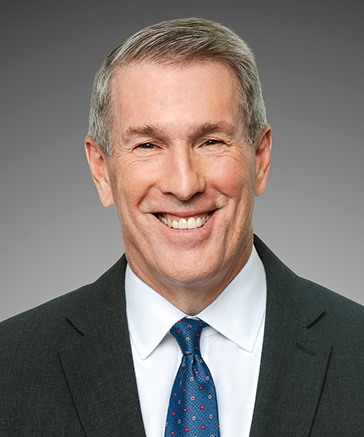 Eric AndersenPresident & Chief Executive Officer
He leads AIG as its president and chief executive officer. AIG earns revenue primarily from insurance premiums and investment income.
 Jon HancockExecutive Vice President and Chief Executive Officer, General Insurance
He leads AIG’s three insurance segments, Claims organization and Chief Underwriting Office. Those segments sell commercial and personal insurance, from property and liability coverage to accident and health products.
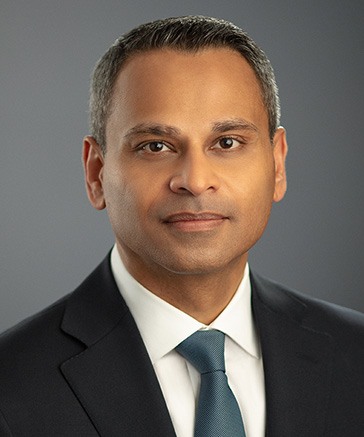 Roshan NavagamuwaExecutive Vice President and Chief Technology and Digital Officer
He leads AIG’s technology solutions, cybersecurity, and digital and AI strategy. AIG relies on technology, digital connectivity and timely data to run its insurance businesses and service customers.
Roles checked November 6, 2026.
What management says it is working on now:
Underwriting and selective growth
Management aims to keep improving underwriting and direct capital toward business it believes offers attractive risk-adjusted returns.
AIG Q2 2026 Earnings Call TranscriptManage risk and reinsurance
Management plans to use its financial resources and reinsurance program to support profitable growth while limiting swings in results.
AIG Q2 2026 Earnings Call TranscriptExpand AI tools
AIG is expanding AI tools to support underwriting and claims decisions, improve work quality and speed, and help teams analyze portfolios.
AIG 2025 Annual ReportControl expenses
Management says it will maintain expense discipline as the business grows and continues modernizing its operations.
AIG Q2 2026 Earnings Call TranscriptBuild talent and connect businesses
AIG is investing in its people and in closer coordination across its businesses so it can bring more of its capabilities to clients.
AIG Q2 2026 Earnings Call Transcript
- Operating earnings per share growth, 2025–2027
- 20% or more compound annual growth
- AIG 2025 Annual Report
What's changing right now?
Growth is picking up. In Q3 2026 it sold 17% more than a year earlier. The year before, quarters averaged -4%.
Since Oct 2026 the share price has risen 1%, from $81.77 to $82.75.
Coming up
Results expected November 3, 2026; call November 4, 2026
Third-quarter 2026 results
AIG is scheduled to report its third-quarter results and hold an earnings call. The update may provide new information on insurance growth, claims and management's priorities.
AIG Investor Relations News ReleasesRefinancing expected later in 2026; maturity early 2027
Eurobond refinancing
Management said a euro-denominated bond is expected to be refinanced later in 2026 before it comes due early in 2027.
AIG Q2 2026 Earnings Call TranscriptRenewals during 2026
Everest retail insurance portfolio transfer
AIG is taking on renewal rights for Everest's retail commercial insurance portfolios. The transfer is expected to expand AIG's reach as policies renew.
AIG 2025 Annual Report
What could go wrong?
No business is a sure thing. These are the risks we found, starting with the ones the company itself names. Where a risk would change part of the valuation, it says which.
Claims may cost more than expected
The timing and size of insurance claims are uncertain, especially for long-lasting liability claims. If claims exceed AIG's estimates, it may need to record additional costs.
From the company's own filingsWould hit how much of each sale it keepsAIG 2025 Form 10-K
Catastrophes and climate exposure
Major natural or human-caused disasters can lead to many claims, disrupt operations and reduce investment values. Changing weather patterns may also make some risks harder to price and insure.
From the company's own filingsWould hit how fast sales growAIG 2025 Form 10-K
Competition and pricing pressure
AIG competes with global, national and local insurers. If it cannot price risks accurately or compete on coverage and service, it may lose business or earn less from policies.
From the company's own filingsWould hit how fast sales growAIG 2025 Form 10-K
Reinsurance availability and cost
AIG uses other insurers to share some risks. If that protection becomes scarce, more expensive or unavailable, AIG may have to keep more risk itself or reduce the coverage it offers.
From the company's own filingsWould hit how much of each sale it keepsAIG 2025 Form 10-K
Changing insurance rules
AIG operates under insurance and other regulations in many jurisdictions. New rules or enforcement actions could raise costs, limit operations or require insurers to hold more capital.
From the company's own filingsWould hit how much of each sale it keepsAIG 2025 Form 10-K
Investment and counterparty losses
AIG invests premium funds and relies on other companies, including reinsurers, to meet their obligations. Market declines, defaults or hard-to-value investments could reduce income or available funds.
From the company's own filingsWould hit how much it has to reinvestAIG 2025 Form 10-K
Is it a good business?
From 2019 to 2025 it earned between -9% and 19% on its shareholders' equity, a median of 7%.
It bought back shares: the count fell 39% from 2016 to 2024, so each remaining share owns a bigger slice.
What might it be worth?
The Valuation snapshot at the top of this page shows the answer. This is how we got there. A share is a slice of the business, so what a share is worth depends on what the business can earn for its owners from here on. We estimate that three ways, from cautious to hopeful, and call the result .
For a bank, the cash it makes is hard to separate from the borrowing and deposits it runs on, so we start from the shareholders' capital already in it, its book equity, and add what it earns above the return those shareholders require. Today a share costs $82.75. Our put its value between $65.86 and $92.00, with $74.57 in the middle.
Bear case, $65.86
Higher catastrophe claims and softening insurance pricing keep profitability below historical targets while heavy share repurchases shrink total equity.
Base case, $74.57
Disciplined commercial insurance underwriting and healthy investment income generate stable returns that roughly match shareholder capital expectations.
Bull case, $92.00
Optimized operations, firm pricing power, and elevated investment yields deliver double-digit profitability that outpaces capital returns and builds equity value.
Test the assumptions
Every valuation rests on a few judgments, and ours are only one set. This one turns on three: how much the bank earns on its equity, how long it keeps an edge over what shareholders require, and how fast its equity grows. The full research shows the evidence behind each.
- We assumed a return on equity of8.0%
- We assumed its edge over the required return lasts3 + 8 years
- We assumed book equity grows1.0% a year
This is an educational explanation built from public filings and our own research, not investment advice. It does not tell you whether to buy or sell anything.
Base estimate
$74.57 -9.9%