


AMKOR TECHNOLOGY, INC.
Nasdaq: AMKR·Tempe, Arizona·CIK 0001047127
- Price
- $34.05
- Base IV
- $7.06
Valuation snapshot
At $34.05, the price is above even our bull case of $26.24.
Values per share, from an .
- No growth
- …
- Loading earnings power
- Base case
- $7.06
- 21% of the price · range -$2.22–$26.24
- Price vs base case
- 382% above
- $34.05 against $7.06
- Base case · our researched forecast, 2026-11-11See the research ↗
- Price vs base · derived: price − base caseWhat the price expects ↗
- Price · StockValuer price feed, 2026-11-16 closeno link today
Whisker on the base case runs bear -$2.22 to bull $26.24, cut off at zero. Values per share.
Price against each value
- Bear case
- -$2.22
- —
- No growth
- …
- —
- Base case
- $7.06
- Price 382% above
What does Amkor Technology do?
Amkor provides outsourced semiconductor packaging and testing services to help chip designers and manufacturers turn silicon wafers into finished electronic components for smartphones, data centers, and automobiles.
It brought in $7.5B of sales in the 12 months to Sep 2026.
Led by Kevin Engel, President and Chief Executive Officer since 2026. Kevin Engel - Amkor Technology
- Industry
- Semiconductors
- Based in
- Tempe, Arizona
- Trades on
- Nasdaq as AMKR
Here is where each dollar a customer pays ends up. Out of every $1 of sales in the 12 months to Sep 2026, about 8¢ was left as profit after every cost, interest and tax. The biggest cost is making what it sells, 83¢ of every dollar.
- Making what it sells83¢
- Research and development2¢
- Sales, marketing and admin5¢
- Tax1¢
- Left as profit8¢
Who pays Amkor Technology, and for what?
Amkor packages and tests semiconductor chips for companies that design or make them. It earns revenue by providing services such as chip packaging, wafer processing and testing, often as a combined, turnkey service.
Its customers are semiconductor makers, including integrated device manufacturers, fabless chip companies, equipment makers and contract foundries.
Advanced Products
83%Flip-chip, memory and wafer-level packaging and related test services; includes most of Amkor’s advanced system-in-package modules.
Flip-chip packagingImage: Amkor Technology Mainstream Products
17%Wirebond packaging, power-device packaging and related test services.
Where its work physically happens, beyond headquarters:
- ATK5 Songdo — Incheon, South Korea. The K5 packaging and test campus houses Amkor’s main R&D center and is being expanded for turnkey test services.
- Amkor Technology Vietnam — Bac Ninh, Vietnam. This advanced packaging facility adds system-in-package and memory capacity, with its production ramp affecting Amkor’s gross margin.
- Peoria Advanced Packaging Campus — Peoria, United States. The campus under construction is intended to add high-volume U.S. advanced packaging and test capacity, with production expected in 2028.
- ATK4 — Gwangju, South Korea. ATK4 supplies semiconductor packaging and test capacity within Amkor’s substantial South Korean manufacturing network.
- ATT T3 — Hukou Township, Taiwan. This factory places Amkor’s Taiwan manufacturing capacity in Hsinchu Industrial Park, close to the region’s semiconductor foundries.
How is the business doing?
Sales grew from $5.1B in 2020 to $6.7B in 2025, about 6% a year.
Running the business leaves about 10¢ of each sales dollar as operating profit, about the same as 9¢ in 2020.
It used $156.1M more cash than it generated in the 12 months to Sep 2026, paid for out of savings or new money.
What does management say it's aiming for?
Amkor says it aims to be a trusted global provider of reliable chip assembly and testing services and innovative solutions, developed with customers and supply-chain partners.
“to be the trusted global provider of reliable assembly and test manufacturing services and innovative solutions”
Who is responsible for the plan?
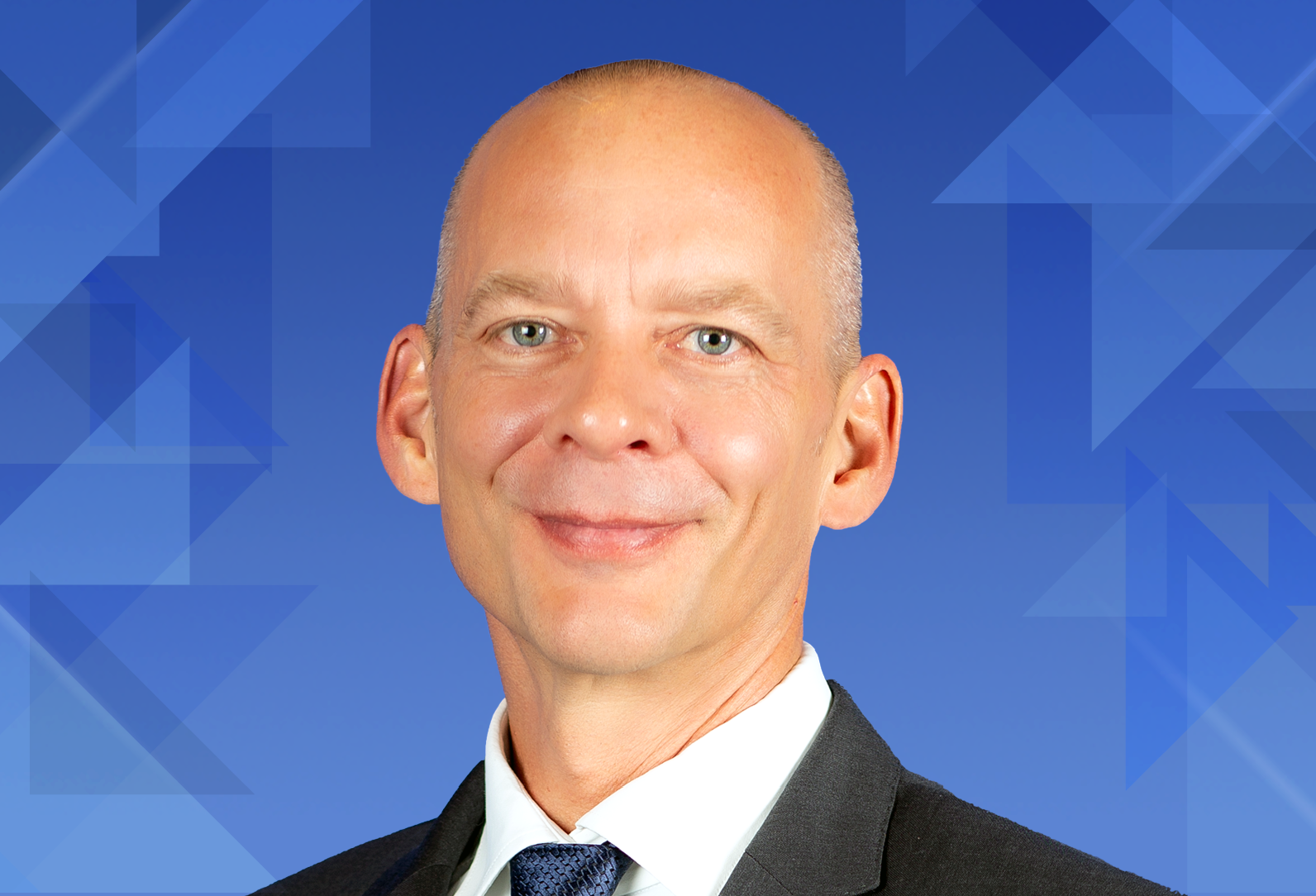 Kevin EngelPresident and Chief Executive Officer
Leads Amkor Technology as president and chief executive officer. Amkor earns revenue by providing semiconductor packaging and test services to customers.
 Farshad HaghighiExecutive Vice President, Chief Sales Officer
Oversees Amkor's sales function. Amkor's sales teams promote its packaging and test services and support customers.
- KyungRok ParkCorporate Vice President and Head of Global R&D Center
Heads Amkor's Global R&D Center. Amkor's research and development focuses on new packaging technologies and test solutions for its services.
Roles checked November 6, 2026.
What management says it is working on now:
Advance packaging and test technology
Management says it is investing in advanced packaging and test technologies to serve needs in computing and AI, automotive, connected devices and mobile communications.
Q3 2026 Amkor Technology Earnings Call TranscriptExpand manufacturing capacity
Management is expanding capacity in Arizona, Korea and Vietnam, with customer advance payments supporting some of the investment.
Q3 2026 Amkor Technology Earnings Call TranscriptDeepen customer partnerships
Amkor says it works with leading semiconductor companies to develop packaging solutions and expand advanced packaging capacity.
2025 Form 10-K, Item 1: BusinessGrow computing business
Management expects strong computing demand, driven by data-center needs, to support growth while personal-computer demand is softer.
Q3 2026 Amkor Technology Earnings Call TranscriptManage investment and utilization
The company says it will manage capacity expansion and costs as market conditions change, while aiming for profitable sales growth.
2025 Form 10-K, Item 7: Management’s Discussion and Analysis
- Computing revenue growth, 2026
- Over 30% year over year
- Q3 2026 Amkor Technology Earnings Call Transcript
- Computing revenue growth, 2027
- 30% or more, at a similar or higher rate than in 2026
- Q3 2026 Amkor Technology Earnings Call Transcript
What's changing right now?
Growth is slowing. In Q3 2026 it sold 0% more than a year earlier. The year before, quarters averaged 19%.
Its operating margin is wider than a year ago: 11¢ per sales dollar, against 8¢.
Since Oct 2026 the share price has fallen 17%, from $41.21 to $34.05.
Recently
October 27, 2026
Quarterly capital expenditures changed to $548.4M
Q3 2026 Form 10-Q, quarterly capital expenditures in USDOctober 27, 2026
Computing share of quarterly sales changed to 26.0%
Q3 2026 Form 10-Q, quarterly end-market mix
Coming up
By the end of 2027
Arizona Phase 1 completion
Management said Phase 1 construction remains on schedule; the facility is intended to add U.S. advanced packaging capacity.
Q3 2026 Amkor Technology Earnings Call TranscriptExpected to break ground in late 2027
Arizona Phase 2 construction
Amkor announced a second phase for its Arizona advanced packaging and test campus, expected to begin construction as Phase 1 nears completion.
Amkor Technology Announces Phase 2 of Arizona Advanced Packaging and Test CampusFebruary 2027
2027 capital spending guidance
Management said it plans to provide specific 2027 capital expenditure guidance on its fourth-quarter call.
Q3 2026 Amkor Technology Earnings Call Transcript
Our own estimate moved too: the base case went from $12.25 to $7.06 a share between our last two valuations. The biggest reason: Quarterly capital expenditures moved from an unreported prior value to $548.4M, as reported in Q3 2026 Form 10-Q, quarterly capital expenditures in USD.
What could go wrong?
No business is a sure thing. These are the risks we found, starting with the ones the company itself names. Where a risk would change part of the valuation, it says which.
Semiconductor market swings
Demand for packaging and testing can fall during industry or economic downturns. Lower orders can leave factories underused and weigh on results.
From the company's own filingsWould hit how fast sales grow2025 Form 10-K, Item 1A: Risk Factors
Customer concentration
The ten largest customers generated 72% of 2025 sales, and Apple and Qualcomm accounted for 29.8% and 11.1%. Losing a large customer or receiving fewer orders could reduce sales and profits.
From the company's own filingsWould hit how fast sales grow2025 Form 10-K, Item 1A: Risk Factors
Capacity investment may outrun demand
Amkor spends heavily on factories and equipment, often before customers commit to orders. If expected demand does not arrive, unused capacity and added costs could pressure profits and cash needs.
From the company's own filingsWould hit how much it has to reinvest2025 Form 10-K, Item 1A: Risk Factors
Intense competition and price pressure
Competitors, customer in-house operations and foundries may win work or pressure prices. Amkor says prices for packaging and test services have generally declined over time.
From the company's own filingsWould hit how fast sales grow2025 Form 10-K, Item 1A: Risk Factors
Supply and equipment availability
Amkor relies on a limited group of suppliers for some materials, and delays or price increases for materials or equipment could disrupt production or reduce margins.
From the company's own filingsWould hit how much of each sale it keeps2025 Form 10-K, Item 1A: Risk Factors
Arizona construction and qualification
The Arizona facility is a large project whose cost, schedule and expected benefits may differ from current expectations. New sites and processes also need customer qualification before production can scale.
From the company's own filingsWould hit how much it has to reinvest2025 Form 10-K, Item 1A: Risk Factors
Fourth-quarter sales guidance of $1.9–$2.0 billion implies limited immediate sequential expansion.
From our researchWould hit how fast sales growQ3 2026 results
Capacity additions increase depreciation and factory operating costs before utilization matures.
From our researchWould hit how much of each sale it keeps2025 Form 10-K
Is it a good business?
From 2016 to 2025 it earned between 8% and 19% on the capital invested in it, a median of 10%. Its cost of capital in the latest valuation is 11.4%; returns were above it in 4 of the 10 years.
From 2016 to 2025 it earned between 6% and 22% on its shareholders' equity, a median of 10%.
Over 10 years its operating margin ranged from 6¢ to 13¢ per sales dollar, a median of 7¢. Gross margin ran from 14¢ to 20¢.
Cost of capital 11.4%
The number of shares has held roughly steady over the past year.
It owes $1B more than it holds in cash, about 1.4 years of operating profit.
What might it be worth?
The Valuation snapshot at the top of this page shows the answer. This is how we got there. A share is a slice of the business, so what a share is worth depends on what the business can earn for its owners from here on. We estimate that three ways, from cautious to hopeful, and call the result .
Today a share costs $34.05. Our put its value between -$2.22 and $26.24, with $7.06 in the middle. Underneath sit two simpler checks: what it would cost to rebuild the business, its , and what today's profit is worth with no growth at all, its .
Bear case, -$2.22
The recent improvement in profits fades as phone-related work stays weak and expensive new factories take longer to fill.
Base case, $7.06
The recent recovery continues at a steadier pace, with computer chips and new factories gradually improving earnings while investment absorbs much of the cash.
Bull case, $26.24
The recent rise in profitability becomes lasting as computer-chip demand fills new factories and turns more earnings into cash.
Another way in: instead of asking what the business is worth, ask what today's price assumes it will do.
Why the gap?
The price expects far more than we do.Price above value: 382%
For Amkor Technology to be worth today's $34.05, sales would need to grow about 42.8% a year. We assume 9.0%. Over the last 5 years, sales grew 5.2% a year.
Or, if sales grow 9.0% as we assume, the price works with a profit margin of 42.7% (we assume 12.5%).
Keep in mind: investors are likely paying for things this model leaves out, such as new businesses or many more years of fast growth.
Do you think sales can grow 42.8% a year?
Try your own numbersWe're not very sure of this range: it scores 46 out of 100 on our checks. The weakest point is scenario dispersion.
Test the assumptions
Our base value of $7.06 rests on three assumptions. Change any of them to see how the value per share responds.
- Revenue growth, 5-year average9.0%
- Operating margin12.5%
- Long-term growth rate2.5%
This is an educational explanation built from public filings and our own research, not investment advice. It does not tell you whether to buy or sell anything.
Base estimate
$7.06 -79.3%