

Floor & Decor Holdings, Inc.
NYSE: FND·Atlanta, Georgia·CIK 0001507079
- Price
- $47.80
- Base IV
- $27.04
Valuation snapshot
At $47.80, the price is above even our bull case of $34.34.
Values per share, from an .
- No growth
- …
- Loading earnings power
- Base case
- $27.04
- 57% of the price · range $20.39–$34.34
- Price vs base case
- 77% above
- $47.80 against $27.04
- Base case · our researched forecast, 2026-11-03See the research ↗
- Price vs base · derived: price − base caseWhat the price expects ↗
- Price · StockValuer price feed, 2026-11-16 closeno link today
Whisker on the base case runs bear $20.39 to bull $34.34. Values per share.
Price against each value
- Bear case
- $20.39
- Price 134% above
- No growth
- …
- —
- Base case
- $27.04
- Price 77% above
What does Floor & Decor Holdings do?
Floor & Decor sells hard surface flooring, installation materials, and accessories to homeowners and professional contractors through warehouse-format stores and an online platform.
It brought in $4.7B of sales in the 12 months to Sep 2026.
Led by Bradley S. Paulsen, Chief Executive Officer since 2025. Senior Leadership :: Floor & Decor Holdings, Inc. (FND)
- Industry
- Consumer discretionary
- Based in
- Atlanta, Georgia
- Trades on
- NYSE as FND
Here is where each dollar a customer pays ends up. Out of every $1 of sales in the 12 months to Sep 2026, about 5¢ was left as profit after every cost, interest and tax. The biggest cost is making what it sells, 55¢ of every dollar.
- Making what it sells55¢
- Sales, marketing and admin38¢
- Tax1¢
- Left as profit5¢
Who pays Floor & Decor Holdings, and for what?
Floor & Decor is a specialty retailer of hard surface flooring, including tile, wood, laminate, vinyl, and natural stone, along with installation tools and accessories. It operates large warehouse-format stores and an e-commerce website, selling directly to customers at everyday low prices. The company makes money from direct merchandise sales across its retail stores and online channels.
The company is paid by individual homeowners—including do-it-yourself and buy-it-yourself shoppers—as well as professional contractors and commercial installers.
Laminate and vinyl
Wood-based laminate flooring, luxury vinyl, and engineered composite rigid core vinyl products.
Tile
Porcelain and ceramic floor and wall tile, porcelain mosaics, and porcelain tile slabs.
Installation materials and tools
Flooring accessories and supplies such as grout, mortar, backer board, adhesives, underlayments, moldings, and installation tools.
Decorative accessories and wall tile
Decorative tiles and mosaics made of natural stone, porcelain, ceramic, and glass, as well as wall tiles and decorative trims.
Wood
Solid prefinished and unfinished hardwood flooring, engineered hardwood, bamboo, and wood countertops.
Natural stone
Quarried stone materials including marble, limestone, travertine, slate, and ledger.
Where its work physically happens, beyond headquarters:
- Savannah Distribution Center — Savannah, United States. This is a 1.4 million sq ft import distribution center near the Port of Savannah. It supplies warehouse stores in the Southeast and East Coast, where Floor & Decor has many stores, so its throughput limits how fast inventory can reach new and existing stores in those regions.
- Houston Distribution Center — Houston, United States. This import distribution center was moved to a larger site in early fiscal 2022. It supplies the large Texas and Central U.S. store base, so its capacity supports sales from stores in Texas, the company's biggest single-state market.
- Los Angeles Distribution Center — Los Angeles, United States. This West Coast distribution center takes in imported product through the ports of Los Angeles and Long Beach. It supplies the company's stores in California and the Southwest.
- Baltimore Distribution Center — Baltimore, United States. This leased distribution center of about 1.5 million sq ft opened in Q4 fiscal 2019 and supplies stores in the Mid-Atlantic and Northeast. Management named it as disrupted by Winter Storm Fern in early 2026, which shows how much stores in that region depend on it.
- Seattle Distribution Center — Seattle, United States. This is the newest distribution center and appears in the fiscal 2025 10-K but not the fiscal 2024 one. It added capacity for the Pacific Northwest, which supports store growth in that region.
Floor & Decor Holdings, Inc. Form 10-K for the Fiscal Year Ended December 25, 2025
How is the business doing?
Sales grew from $2.4B in 2020 to $4.7B in 2025, about 14% a year.
Running the business leaves about 6¢ of each sales dollar as operating profit, down from 9¢ in 2020.
After paying for its upkeep and new investment, it had $342.5M of cash to spare in the 12 months to Sep 2026.
What does management say it's aiming for?
Floor & Decor exists to improve the lives of homeowners, professional contractors, and communities by helping them transform and improve their living and working spaces.
“Improving lives by improving spaces.”
Who is responsible for the plan?
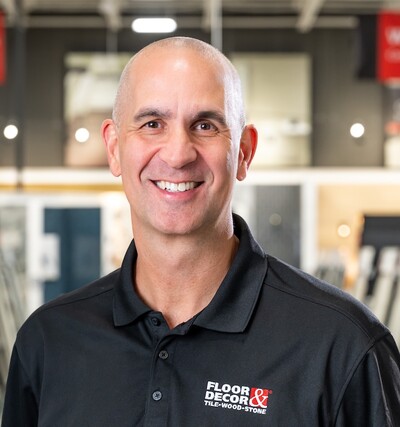 Bradley S. PaulsenChief Executive Officer
Oversees the company's overall operations, strategic direction, and retail store network. Floor & Decor generates revenue as a multi-channel specialty retailer of hard surface flooring and related accessories.
 Ersan SaymanExecutive Vice President and Chief Merchandising Officer
Oversees merchandising, visual merchandising, and product sourcing strategies across all retail stores. Merchandising determines the product mix and inventory of tile, wood, stone, and installation materials sold to retail and professional customers.
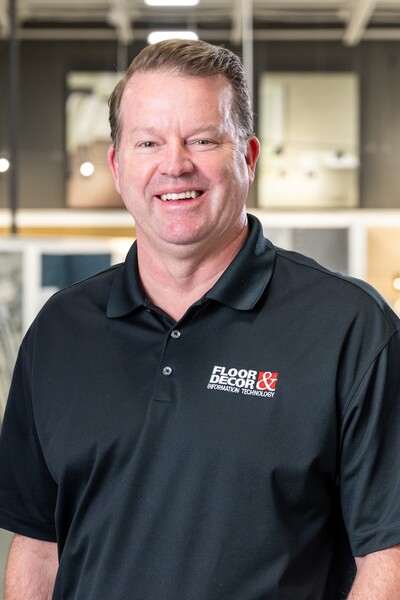 John AdamsonExecutive Vice President and Chief Information Officer
Oversees enterprise information technology, digital applications, cybersecurity, and data infrastructure. Information technology infrastructure powers store point-of-sale systems, supply chain logistics, and digital platforms that support flooring retail sales.
Roles checked November 14, 2026.
What management says it is working on now:
Open warehouse-format stores in new and existing markets
Management is expanding its warehouse-format store base from 270 locations toward a long-term goal of at least 500 stores across the United States, utilizing store formats between 50,000 and 75,000 square feet.
Floor & Decor Holdings, Inc. Form 10-K for the Fiscal Year Ended December 25, 2025Increase comparable store sales
The company focuses on expanding its dynamic product assortment at everyday low prices, enhancing customer service, investing in store staff and remodels, and allowing newer stores to mature.
Floor & Decor Holdings, Inc. Form 10-K for the Fiscal Year Ended December 25, 2025Invest in the professional customer experience
The company is investing in dedicated sales personnel, commercial credit offerings, free job storage, and its Pro Premier loyalty program to drive repeat, high-ticket orders from flooring installers.
Floor & Decor Holdings, Inc. Form 10-K for the Fiscal Year Ended December 25, 2025Enhance connected customer and digital capabilities
Management is integrating online and physical shopping by expanding digital catalogs, store inventory visibility, mobile app features, and project design tools for consumers and contractors.
Floor & Decor Holdings, Inc. Form 10-K for the Fiscal Year Ended December 25, 2025Enhance profit margins through operational efficiencies
The company aims to improve operating margins through direct factory sourcing, reducing supply chain costs, and leveraging fixed store and corporate expenses over larger sales volumes.
Floor & Decor Holdings, Inc. Form 10-K for the Fiscal Year Ended December 25, 2025
- Net sales, fiscal 2026
- $4,765 million to $4,835 million
- Floor & Decor Holdings, Inc. Reports Third Quarter Fiscal 2026 Financial Results
- Comparable store sales, fiscal 2026
- (3.5)% to (2.0)%
- Floor & Decor Holdings, Inc. Reports Third Quarter Fiscal 2026 Financial Results
- Diluted earnings per share, fiscal 2026
- $2.19 to $2.29
- Floor & Decor Holdings, Inc. Reports Third Quarter Fiscal 2026 Financial Results
- Adjusted EBITDA, fiscal 2026
- $535 million to $550 million
- Floor & Decor Holdings, Inc. Reports Third Quarter Fiscal 2026 Financial Results
- New warehouse store openings, fiscal 2027
- 10 to 15 new stores
- Floor & Decor Holdings, Inc. Reports Third Quarter Fiscal 2026 Financial Results
- Total warehouse-format store count, over the long-term
- at least 500 stores
- Floor & Decor Holdings, Inc. Form 10-K for the Fiscal Year Ended December 25, 2025
What's changing right now?
Growth is holding steady. In Q3 2026 it sold 3% more than a year earlier. The year before, quarters averaged 2%.
Its operating margin is about where it was a year ago, 6¢ per sales dollar.
Since Nov 2026 the share price has fallen 3%, from $49.14 to $47.80.
Coming up
February 2027
Reporting of 53rd operating week in fiscal 2026
Fiscal 2026 contains an extra operating week in the fourth quarter, which management projects will contribute approximately $65 million in net sales and $0.08 in diluted EPS.
Floor & Decor Holdings, Inc. Reports Third Quarter Fiscal 2026 Financial ResultsFiscal 2027
Store opening pace moderation
The company plans to open 10 to 15 new warehouse stores in fiscal 2027, moderating from 20 openings in 2026 to conserve capital amid ongoing housing market softness.
Floor & Decor Holdings, Inc. Reports Third Quarter Fiscal 2026 Financial ResultsThrough 2027
Enterprise resource planning system rollout
The company is completing the multi-year phased rollout of its enterprise software system to upgrade core financial and merchandising operations.
Floor & Decor Holdings, Inc. Form 10-K for the Fiscal Year Ended December 25, 2025Expected 2026–2027
Opening of new regional distribution center near Baltimore
The company plans to expand its distribution and fulfillment network by opening an additional Company-operated distribution center near Baltimore.
Floor & Decor Holdings, Inc. Form 10-K for the Fiscal Year Ended December 25, 2025
What could go wrong?
No business is a sure thing. These are the risks we found, starting with the ones the company itself names. Where a risk would change part of the valuation, it says which.
Housing market slowdown and elevated interest rates
Elevated mortgage rates and weak existing home sales reduce home remodeling projects, leading to lower customer store traffic and declining comparable store sales.
From the company's own filingsWould hit how fast sales growFloor & Decor Holdings, Inc. Form 10-K for the Fiscal Year Ended December 25, 2025
Rising construction costs and new store expansion execution
Higher building, leasing, and permitting expenses have made newer stores costlier to open and slower to reach expected profitability levels.
From the company's own filingsWould hit how much it has to reinvestFloor & Decor Holdings, Inc. Form 10-K for the Fiscal Year Ended December 25, 2025
Import tariffs and foreign sourcing regulations
The company procures most products internationally, making it vulnerable to trade policy changes, tariffs, and customs restrictions that increase product costs.
From the company's own filingsWould hit how much of each sale it keepsFloor & Decor Holdings, Inc. Form 10-K for the Fiscal Year Ended December 25, 2025
Intense competition from home improvement retailers
The flooring retail market is highly competitive, and large home improvement chains or regional competitors could lower prices or improve services to take market share.
From the company's own filingsWould hit how fast sales growFloor & Decor Holdings, Inc. Form 10-K for the Fiscal Year Ended December 25, 2025
Inventory management and demand forecasting risks
Maintaining large in-stock inventory exposes the company to excess stock, storage costs, and price markdowns if customer design trends or project demand change.
From the company's own filingsWould hit how much of each sale it keepsFloor & Decor Holdings, Inc. Form 10-K for the Fiscal Year Ended December 25, 2025
Executive leadership transition
The transition to a new Chief Executive Officer and leadership changes on the Board of Directors create operational continuity and strategy execution risks.
From the company's own filingsWould hit how much of each sale it keepsFloor & Decor Holdings, Inc. Form 10-K for the Fiscal Year Ended December 25, 2025
Management updated fiscal 2026 guidance indicating that comparable store sales will decline 3.5% for the full year, indicating ongoing volatility.
From our researchWould hit how fast sales growFloor & Decor Q3 2026 Earnings Release
Rapid distribution center expansion in previous years required heavier front-loaded capital outlays above $440M.
From our researchWould hit how much it has to reinvestFloor & Decor FY2024 Form 10-K
Is it a good business?
From 2016 to 2025 it earned between 9% and 20% on the capital invested in it, a median of 14%. Its cost of capital in the latest valuation is 10.6%; returns were above it in 8 of the 10 years.
From 2016 to 2025 it earned between 9% and 32% on its shareholders' equity, a median of 20%.
Over 10 years its operating margin ranged from 6¢ to 10¢ per sales dollar, a median of 8¢. Gross margin ran from 41¢ to 44¢.
Cost of capital 10.6%
It bought back shares: the count fell 1.6% in a year, so each remaining share owns a slightly bigger slice.
It holds $197M more in cash than it owes.
What might it be worth?
The Valuation snapshot at the top of this page shows the answer. This is how we got there. A share is a slice of the business, so what a share is worth depends on what the business can earn for its owners from here on. We estimate that three ways, from cautious to hopeful, and call the result .
Today a share costs $47.80. Our put its value between $20.39 and $34.34, with $27.04 in the middle. Underneath sit two simpler checks: what it would cost to rebuild the business, its , and what today's profit is worth with no growth at all, its .
Bear case, $20.39
This scenario envisions persistent sluggishness in housing turnover and home remodeling, keeping store expansion at a subdued pace and leaving sales growth near recent low single-digit levels while higher operating expenses keep profit margins compressed.
Base case, $27.04
This scenario models a gradual stabilization in existing home sales that allows the company to open fifteen to eighteen new warehouses each year and moderately rebuild profit margins as sales rebound toward mid-single-digit rates.
Bull case, $34.34
This scenario captures a robust rebound in residential renovation and housing mobility, empowering the company to accelerate new store openings back toward thirty per year and restore peak profitability as stores handle higher customer traffic.
Another way in: instead of asking what the business is worth, ask what today's price assumes it will do.
Why the gap?
The price expects far more than we do.Price above value: 77%
For Floor & Decor Holdings to be worth today's $47.80, sales would need to grow about 20.9% a year. We assume 5.8%. Over the last 5 years, sales grew 7.9% a year.
Or, if sales grow 5.8% as we assume, the price works with a profit margin of 13.1% (we assume 7.2%).
Keep in mind: investors are likely paying for things this model leaves out, such as new businesses or many more years of fast growth.
Do you think sales can grow 20.9% a year?
Try your own numbersWe're fairly sure of this range: it scores 77 out of 100 on our checks. The weakest point is terminal-value dependency.
Test the assumptions
Our base value of $27.04 rests on three assumptions. Change any of them to see how the value per share responds.
- Revenue growth, 5-year average5.8%
- Operating margin7.2%
- Long-term growth rate2.8%
This is an educational explanation built from public filings and our own research, not investment advice. It does not tell you whether to buy or sell anything.
Base estimate
$27.04 -43.4%