


GOODYEAR TIRE & RUBBER CO /OH/
Nasdaq: GT·Akron, Ohio·CIK 0000042582
- Price
- $4.08
- Base IV
- $6.01
Valuation snapshot
At $4.08, the price sits between our bear case, which is below zero, and our base case ($6.01).
Values per share, from an .
- No growth
- …
- Loading earnings power
- Base case
- $6.01
- above today's price · range -$10.57–$26.36
- Price vs base case
- 32% below
- $4.08 against $6.01
- Base case · our researched forecast, 2026-11-12See the research ↗
- Price vs base · derived: price − base caseWhat the price expects ↗
- Price · StockValuer price feed, 2026-11-16 closeno link today
Whisker on the base case runs bear -$10.57 to bull $26.36, cut off at zero. Values per share.
Price against each value
- Bear case
- -$10.57
- —
- No growth
- …
- —
- Base case
- $6.01
- Price 32% below
What does Goodyear Tire & Rubber Co /oh/ do?
Goodyear manufactures and distributes tires for automobiles, trucks, aircraft, and motorcycles while providing tire retreading and repair services to individual consumers and commercial fleets.
It brought in $17.6B of sales in the 12 months to Sep 2026.
Led by Roger J. Wood, Interim Chief Executive Officer and President since 2026. Goodyear Form 8-K (Item 5.02) – Interim CEO appointment
- Industry
- Consumer discretionary
- Based in
- Akron, Ohio
- Trades on
- Nasdaq as GT
Here is where each dollar a customer pays ends up. For every $1 of sales in the 12 months to Sep 2026, it spent about $1.03, so it lost 3¢ on each dollar. The biggest cost is making what it sells, 82¢ of every dollar.
- Making what it sells82¢
- Sales, marketing and admin16¢
- Everything else, including interest4¢
- Tax1¢
- Lost on each dollar−3¢
Who pays Goodyear Tire & Rubber Co /oh/, and for what?
Goodyear develops, manufactures, and sells tires worldwide for cars, trucks, buses, aircraft, and other vehicles. It also operates commercial truck service centers and about 750 retail outlets offering vehicle maintenance and repair services. The company makes money by selling tires to vehicle manufacturers as original equipment and to drivers through dealers and replacement channels.
Goodyear is paid by vehicle manufacturers that install tires on new vehicles, individual drivers buying replacement tires, and commercial fleets and independent dealers purchasing tires and maintenance services.
Americas
59%Develops, manufactures, distributes, and sells tires and related automotive products and services across North, Central, and South America.
Europe, Middle East and Africa
30%Develops, manufactures, distributes, and sells tires and provides fleet management solutions and retreading services across Europe, the Middle East, and Africa.
Asia Pacific
11%Develops, manufactures, distributes, and sells tires and retreading materials for passenger, commercial, and farm vehicles throughout the Asia Pacific region.
Where its work physically happens, beyond headquarters:
- Lawton Tire Plant — Lawton, United States. This is Goodyear's largest North American tire plant. It makes consumer tires, and the state reports that more than $1 billion has been invested there since it opened, so it carries much of the Americas segment's large-rim-diameter, higher-margin output.
- Napanee Tire Plant — Napanee, Canada. Goodyear has committed more than C$575 million to modernize and expand this consumer tire plant, with completion expected by mid-2027. That makes it one of the company's largest current capital projects in the Americas.
- Colmar-Berg Innovation Center and Tire Plant — Colmar-Berg, Luxembourg. Goodyear's Luxembourg tire plant and its EMEA innovation center share this site, and Goodyear's own news release puts the planned innovation workforce at about 1,500 people, including roughly 1,000 scientists, engineers and technicians who develop products for the EMEA segment.
- Danville Plant — Danville, United States. Goodyear is ending commercial truck tire production here and refocusing the plant on aviation tires and mixing. The pre-tax charges are $130–140 million, Goodyear expects about $65 million a year of Americas segment operating income benefit, and this remains its only North American aviation tire plant.
- Akron Research & Development and Technical Center — Akron, United States. Item 2 of the FY2025 10-K names this leased facility as Goodyear's main research and development and technical center, separate from the headquarters. It drives the company's global product development and premium tire mix.
Goodyear Tire & Rubber Co. Form 10-K for the Year Ended December 31, 2025
How is the business doing?
Sales grew from $12.3B in 2020 to $18.3B in 2025, about 8% a year.
After paying for its upkeep and new investment, it had $90M of cash to spare in the 12 months to Sep 2026.
What does management say it's aiming for?
Goodyear exists to enable mobility by developing advanced tire technologies, products, and services that meet the everyday transportation needs of consumers and fleets.
“We create leading technologies, products and services that anticipate the mobility and sustainability needs of consumers and fleets.”
Who is responsible for the plan?
 Roger J. WoodInterim Chief Executive Officer and President
Leads Goodyear as interim CEO and President while the board searches for a permanent successor to Mark W. Stewart. The CEO oversees the whole company, which makes and sells tires and related products and services across its Americas, EMEA and Asia Pacific segments.
 Grégory BoucharlatSenior Vice President, Global Commercial
Coordinates strategy for Goodyear's global Commercial tire business and leads its Tires-as-a-Service organization. Commercial tires and fleet tire services are among the products and services Goodyear sells to fleet and commercial customers.
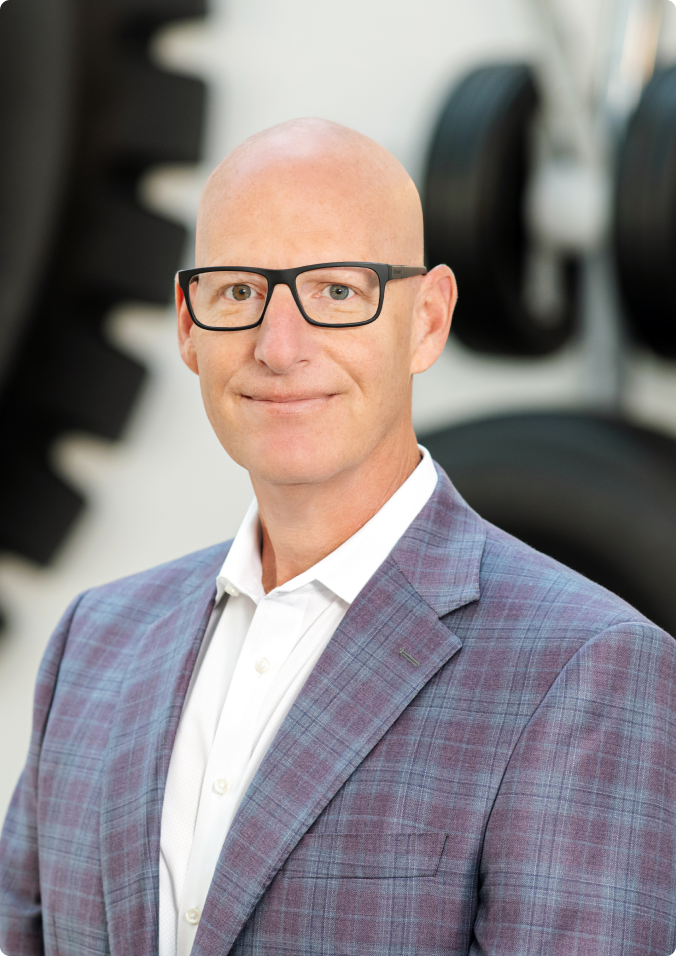 Chris HelselSenior Vice President and Chief Technical Officer
Leads Goodyear's global product design and research and development work, including product quality and intelligent tire solutions. Product design and R&D shape the tire lines that Goodyear makes and sells.
Roles checked November 12, 2026.
What management says it is working on now:
Manufacturing Footprint Optimization
Management is modernizing plants to improve cost competitiveness and expand production of high-margin, large-rim diameter tires while closing high-cost manufacturing facilities.
Goodyear Tire & Rubber Co. Form 10-K for the Year Ended December 31, 2025Cost Reduction and Margin Enhancement
The company is focused on realizing ongoing run-rate savings through purchasing leverage, administrative expense reductions, and supply chain logistics planning.
Goodyear Tire & Rubber Co. Form 10-K for the Year Ended December 31, 2025Debt Reduction and Deleveraging
Management is prioritizing debt repayment and balance sheet strengthening using cash proceeds from completed divestitures of non-core businesses.
Goodyear Tire & Rubber Co. Form 10-K for the Year Ended December 31, 2025Brand Tiering and Portfolio Optimization
Goodyear is sharpening its brand tiers, establishing the Cooper brand as its primary second-tier brand in EMEA following the sale of Dunlop, and improving product mix.
Goodyear Tire & Rubber Co. Form 10-K for the Year Ended December 31, 2025Sustainable Materials Innovation
The company is advancing research into bio-based and recycled materials to introduce sustainable tires and replace petroleum-based oils across its product lines.
Goodyear Tire & Rubber Co. Form 10-K for the Year Ended December 31, 2025
- Full-Year Segment Operating Income, FY 2026
- Approximately $600 million
- Goodyear Q2 2026 Earnings Call Transcript
- Fayetteville Plant Closure Annualized Savings, by 2028
- Approximately $270 million annually
- Goodyear Reports Second Quarter 2026 Results
- Americas Segment Operating Income Improvement from Fayetteville Closure, by 2027
- Approximately $90 million
- Goodyear Reports Second Quarter 2026 Results
- Incremental Goodyear Forward Plan Savings, FY 2026
- Approximately $300 million to $325 million
- Goodyear Tire & Rubber Co. Form 10-K for the Year Ended December 31, 2025
- Scope 1 and 2 Greenhouse Gas Emissions Reduction, by 2030
- 46% reduction from 2019 base year
- Goodyear Tire & Rubber Co. Form 10-K for the Year Ended December 31, 2025
- Sustainable Material Tire Launch, by 2030
- Industry's first 100% sustainable material tire
- Goodyear Tire & Rubber Co. Form 10-K for the Year Ended December 31, 2025
What's changing right now?
Growth is picking up. In Q3 2026 it sold 2% less than a year earlier. The year before, quarters averaged -4%.
Since Nov 2026 the share price has fallen 8%, from $4.44 to $4.08.
Recently
November 4, 2026
Total segment operating margin, quarterly changed to 3.8%
Goodyear Q3 2026 results 8-KNovember 4, 2026
Net sales growth, quarterly year over year changed to -2.3%
Goodyear Q3 2026 results 8-KDecember 31, 2025
Worldwide tire unit volume, full year changed to 158700000 number
Goodyear 2025 Form 10-K
Coming up
July 2026
United Steelworkers Master Labor Contract Expiration
The primary collective bargaining agreement covering about 4,300 U.S. workers expires, requiring renewal to prevent potential factory disruptions or higher labor costs.
Goodyear Tire & Rubber Co. Form 10-K for the Year Ended December 31, 20252027–2028
Fayetteville Manufacturing Facility Closure
Closing the Fayetteville plant is planned to lower high-cost manufacturing capacity, delivering $90 million in operating profit gains in 2027 and $270 million annually by 2028.
Goodyear Reports Second Quarter 2026 Results2026–2027
Completion of High-Cost European Plant Closures
Completing the rationalization of manufacturing plants in Fulda and Fürstenwalde, Germany, and Kariega, South Africa, aims to structurally reduce fixed production costs.
Goodyear Tire & Rubber Co. Form 10-K for the Year Ended December 31, 20252028
Senior Debt Maturities Cluster
Following the mid-2026 refinancing of its 2027 notes into 2032 notes, Goodyear approaches its next significant cluster of debt maturities.
Fitch Rates Goodyear's Senior Notes
Our own estimate moved too: the base case went from $15.75 to $6.01 a share between our last two valuations.
What could go wrong?
No business is a sure thing. These are the risks we found, starting with the ones the company itself names. Where a risk would change part of the valuation, it says which.
Intense Global Tire Competition
Goodyear competes against major global rivals and low-cost producers that manufacture in low-cost countries, which may depress market share and pricing power.
From the company's own filingsWould hit how fast sales growGoodyear Tire & Rubber Co. Form 10-K for the Year Ended December 31, 2025
Volatile Raw Material and Transportation Costs
Prices for natural rubber, synthetic rubber, petrochemicals, and freight fluctuate widely, and price increases cannot always be passed on to customers immediately.
From the company's own filingsWould hit how much of each sale it keepsGoodyear Tire & Rubber Co. Form 10-K for the Year Ended December 31, 2025
Substantial Debt Obligations
With around $6.2 billion in total debt, required interest payments and borrowing covenants restrict cash flow, limit capital spending, and increase vulnerability to downturns.
From the company's own filingsWould hit how much it has to reinvestGoodyear Tire & Rubber Co. Form 10-K for the Year Ended December 31, 2025
High Operating Fixed Costs
A substantial portion of manufacturing and administrative expenses are fixed, causing operating income to drop disproportionately whenever tire sales volumes decline.
From the company's own filingsWould hit how much of each sale it keepsGoodyear Tire & Rubber Co. Form 10-K for the Year Ended December 31, 2025
Tariffs and Trade Policy Changes
New or increased tariffs on imported tires and raw materials limit global supply chain flexibility and add hundreds of millions in direct annualized costs.
From the company's own filingsWould hit how much of each sale it keepsGoodyear Tire & Rubber Co. Form 10-K for the Year Ended December 31, 2025
Labor Agreements and Work Stoppage Risks
More than half of the global workforce is unionized, with key agreements expiring periodically; failing to renegotiate contracts could lead to strikes or operating interruptions.
From the company's own filingsWould hit how much of each sale it keepsGoodyear Tire & Rubber Co. Form 10-K for the Year Ended December 31, 2025
Volume fell about 3% in Q3 against roughly flat guidance, so the recovery has been slower than planned.
From our researchWould hit how fast sales growFinviz: Goodyear misses as sequential rebound falls short
Americas segment margin fell to 3.6% in Q3 2026 from 7.5% a year earlier.
From our researchWould hit how much of each sale it keepsGoodyear Q3 2026 results 8-K (last10k mirror)
Is it a good business?
From 2018 to 2025 it earned between -53% and 15% on its shareholders' equity, a median of -3%.
The number of shares has held roughly steady over the past year.
It owes $6.6B more than it holds in cash. An operating-profit comparison is unavailable from the published quarters.
What might it be worth?
The Valuation snapshot at the top of this page shows the answer. This is how we got there. A share is a slice of the business, so what a share is worth depends on what the business can earn for its owners from here on. We estimate that three ways, from cautious to hopeful, and call the result .
Today a share costs $4.08. Our put its value between -$10.57 and $26.36, with $6.01 in the middle. Underneath sit two simpler checks: what it would cost to rebuild the business, its , and what today's profit is worth with no growth at all, its .
Bear case, -$10.57
In this scenario Goodyear's sales keep slipping, as they have every year since 2023, and its profits recover only slightly from this year's very thin levels, because rising material and tariff costs eat up most of its cost savings.
Base case, $6.01
In this scenario Goodyear's sales, which have shrunk for three straight years, level off next year and then grow slowly, while profits climb back toward the levels of 2024–2025 as cost cuts finally show through.
Bull case, $26.36
In this scenario Goodyear turns the corner after three years of shrinking sales, growing modestly again as cheaper imports face new trade barriers, and its profits rise back to the strong level it briefly reached at the end of 2025.
Another way in: instead of asking what the business is worth, ask what today's price assumes it will do.
Why the gap?
The price expects less than we do.Margin of safety: 32%
At today's $4.08, the price makes sense if sales shrink about 0.0% a year. We assume they grow 1.6%. Over the last 5 years, sales grew 1.8% a year.
Or, if sales grow 1.6% as we assume, the price works with a profit margin of 5.6% (we assume 6.0%).
Keep in mind: a low price can mean investors see a risk that isn't in the filings yet. Check the Full research tab for what could go wrong.
Do you think sales will shrink?
Try your own numbersWe're not very sure of this range: it scores 38 out of 100 on our checks. The weakest point is scenario dispersion.
Test the assumptions
Our base value of $6.01 rests on three assumptions. Change any of them to see how the value per share responds.
- Revenue growth, 5-year average1.6%
- Operating margin6.0%
- Long-term growth rate2.0%
This is an educational explanation built from public filings and our own research, not investment advice. It does not tell you whether to buy or sell anything.
Base estimate
$6.01 47.4%