


Owens Corning
NYSE: OC·Toledo, Ohio·CIK 0001370946
- Price
- $114.41
- Base IV
- $147.97
Valuation snapshot
At $114.41, the price sits between our bear case ($74.15) and base case ($147.97).
Values per share, from an .
- No growth
- …
- Loading earnings power
- Base case
- $147.97
- above today's price · range $74.15–$229.04
- Price vs base case
- 23% below
- $114.41 against $147.97
- Base case · our researched forecast, 2026-11-13See the research ↗
- Price vs base · derived: price − base caseWhat the price expects ↗
- Price · StockValuer price feed, 2026-11-16 closeno link today
Whisker on the base case runs bear $74.15 to bull $229.04. Values per share.
Price against each value
- Bear case
- $74.15
- Price 54% above
- No growth
- …
- —
- Base case
- $147.97
- Price 23% below
What does Owens Corning do?
Owens Corning provides roofing shingles, insulation materials, and door systems to help builders and homeowners protect and insulate residential and commercial buildings.
It brought in $9.7B of sales in the 12 months to Sep 2026.
Led by Brian D. Chambers, Board Chair and Chief Executive Officer since 2019. Owens Corning Form 8-K (Item 5.02): Todd W. Fister appointed President and COO; Brian D. Chambers continues as Chief Executive Officer
- Industry
- Materials
- Based in
- Toledo, Ohio
- Trades on
- NYSE as OC
Here is where each dollar a customer pays ends up. For every $1 of sales in the 12 months to Sep 2026, it spent about $1.04, so it lost 4¢ on each dollar. The biggest cost is making what it sells, 75¢ of every dollar.
- Making what it sells75¢
- Research and development2¢
- Sales, marketing and admin10¢
- Everything else it takes to operate11¢
- Interest and other costs3¢
- Tax1¢
- Other items after tax3¢
- Lost on each dollar−4¢
Who pays Owens Corning, and for what?
Owens Corning manufactures and sells building materials, primarily residential roofing shingles, thermal and acoustical insulation, and interior and exterior doors. It makes money by selling these manufactured products to distributors, home centers, and builders.
Owens Corning sells primarily to commercial customers, including building material distributors, home centers, lumberyards, insulation installers, and homebuilders.
Roofing
44%Manufactures laminate asphalt roofing shingles, roofing components, oxidized asphalt, and glass nonwoven mat for residential and commercial construction.
Insulation
37%Produces thermal, acoustical, and structural insulation products for residential, commercial, and industrial applications across various temperature ranges.
Doors
21%Designs and manufactures interior and exterior residential doors, door systems, and related components made of wood, glass, fiberglass, and metal.
Owens Corning interior and exterior residential doors.Image: Owens Corning
Where its work physically happens, beyond headquarters:
- Newark Insulation Plant — Newark, United States. Named in the 10-K as one of the main owned plants of the Insulation segment, which had about $934 million of net sales in Q2 2025; this list comes from the FY2022 10-K and could not be checked against the FY2025 filing.
- Medina Shingle Plant — Medina, United States. Owens Corning is adding a convertible laminate shingle line at this Roofing plant and says the line, together with earlier investments, opens up capacity similar to a new greenfield shingle plant.
- Prattville Shingle Plant (under construction) — Prattville, United States. A planned greenfield shingle plant with a four-wide laminator and capacity of about six million squares a year of Duration-series laminate shingles; construction is expected to start in early 2026, with production in 2027.
- Kansas City Insulation Plant — Kansas City, United States. Named in the 10-K as a main owned Insulation plant serving the central U.S. residential and commercial insulation market; this list comes from the FY2022 10-K and could not be checked against the FY2025 filing.
- Science and Technology Center — Granville, United States. The FY2025 10-K names this campus of about 500 acres as the center of the company's research and development, which supports new products for the Roofing, Insulation and Doors segments.
Owens Corning Form 10-K for the period ending December 31, 2025
How is the business doing?
Sales grew from $7.1B in 2020 to $10.1B in 2025, about 7% a year.
Running the business leaves about 2¢ of each sales dollar as operating profit, up from 2¢ in 2020.
After paying for its upkeep and new investment, it had $767M of cash to spare in the 12 months to Sep 2026.
What does management say it's aiming for?
Owens Corning aims to build a sustainable future through innovation in building materials and science.
“To build a sustainable future through material innovation.”
Who is responsible for the plan?
- Brian D. ChambersBoard Chair and Chief Executive Officer
Leads Owens Corning as chief executive and chairs its board; he gave up the President title when Todd Fister became President and Chief Operating Officer. The CEO oversees a company whose reportable segments sell roofing, insulation and doors products to building and construction markets.
- Nicolas Del MonacoPresident, Roofing
Leads the Roofing business, which reports to the President and Chief Operating Officer. The 10-K says Roofing mainly sells laminate asphalt roofing shingles and made up about 43% of 2025 reportable segment net sales, the largest of the three segments.
- José Méndez-AndinoExecutive Vice President and Chief Innovation Officer
Oversees materials, process and product innovation, along with enterprise R&D, capital delivery, product stewardship and quality. These innovation, R&D and quality functions support the roofing, insulation and doors products that Owens Corning makes and sells.

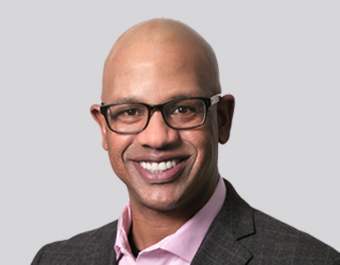
Roles checked November 13, 2026.
What management says it is working on now:
Portfolio Refocusing on Building Products
Management is focusing the company on residential and commercial building products in North America and Europe, supported by the divestiture of the glass reinforcements business.
Owens Corning Form 10-K for the period ending December 31, 2025Doors Segment Integration and Cost Synergies
Following the acquisition of Masonite, management is prioritizing cost controls, operational synergy capture, and working capital discipline within the Doors business.
Owens Corning Form 10-K for the period ending December 31, 2025Productivity and Cost Management
Across segments, management is concentrated on driving productivity and controlling capital expenditures to manage through soft residential construction and remodeling demand.
Owens Corning Form 10-K for the period ending December 31, 2025Tariff and Supply Chain Mitigation
Management is implementing supply chain adjustments, productivity actions, and cost savings to offset the operating profit impact of enacted import tariffs.
Owens Corning Form 10-K for the period ending December 31, 2025Shareholder Capital Returns
The company continues returning cash to shareholders via ongoing share repurchases under its board authorization, repurchasing 5.9 million shares in 2025.
Owens Corning Form 10-K for the period ending December 31, 2025
- Capital Additions, full year 2026
- approximately $800 million
- Owens Corning Reports Fourth-Quarter and Full-Year 2025 Results
- General Corporate EBITDA Expenses, full year 2026
- $245 million to $255 million
- Owens Corning Reports Fourth-Quarter and Full-Year 2025 Results
- Interest Expense, full year 2026
- $255 million to $265 million
- Owens Corning Reports Fourth-Quarter and Full-Year 2025 Results
- Effective Tax Rate on Adjusted Earnings, full year 2026
- 24% to 26%
- Owens Corning Reports Fourth-Quarter and Full-Year 2025 Results
- Depreciation and Amortization, full year 2026
- approximately $680 million
- Owens Corning Reports Fourth-Quarter and Full-Year 2025 Results
What's changing right now?
Growth is holding steady. In Q3 2026 it sold 7% less than a year earlier. The year before, quarters averaged -7%.
Its operating margin is wider than a year ago: a loss of 6¢ per sales dollar, against a loss of 12¢.
Since Oct 2026 the share price has fallen 6%, from $121.62 to $114.41.
Recently
November 4, 2026
Roofing Adjusted EBITDA Margin (Q3) changed to 29.0%
Owens Corning Q3 2026 Earnings ReleaseNovember 4, 2026
Adjusted EBITDA margin, third quarter changed to 20.0%
OC Q3 2026 press releaseNovember 4, 2026
Net sales, trailing twelve months (continuing operations) changed to $9.7B
OC Q3 2026 press release
Coming up
First few months of 2026
Closing of Glass Reinforcements Divestiture
Completion of the sale of the global glass reinforcements business for approximately $474 million net of cash, completing the portfolio shift toward building products.
Owens Corning Form 10-K for the period ending December 31, 2025Third quarter of 2026
Maturity of 3.4% Senior Notes
Scheduled debt maturity of $399 million in 3.4% senior notes, requiring refinancing or settlement using cash and credit facilities.
Owens Corning Form 10-K for the period ending December 31, 2025
Our own estimate moved too: the base case went from $136.41 to $147.97 a share between our last two valuations. The biggest reason: Adjusted EBITDA margin, third quarter moved from an unreported prior value to 20.0%, as reported in OC Q3 2026 press release.
What could go wrong?
No business is a sure thing. These are the risks we found, starting with the ones the company itself names. Where a risk would change part of the valuation, it says which.
Weakness in Housing and Construction Cycles
High mortgage rates and inflation reduce housing affordability and remodeling activity, lowering overall demand and sales volumes across all segments.
From the company's own filingsWould hit how fast sales growOwens Corning Form 10-K for the period ending December 31, 2025
Raw Material and Energy Cost Inflation
The company relies heavily on energy-linked commodities such as asphalt and natural gas; price hikes or supply bottlenecks can squeeze profit margins if not passed along.
From the company's own filingsWould hit how much of each sale it keepsOwens Corning Form 10-K for the period ending December 31, 2025
Customer Concentration and Short-Term Commitments
Two major customers accounted for 28% of net sales in 2025 without long-term volume agreements, meaning customer loss or contract changes could quickly hurt revenue.
From the company's own filingsWould hit how fast sales growOwens Corning Form 10-K for the period ending December 31, 2025
Tariffs and International Trade Restrictions
Tariffs enacted by the United States and foreign retaliatory tariffs can raise material costs and disrupt cross-border shipping, hurting operating profits.
From the company's own filingsWould hit how much of each sale it keepsOwens Corning Form 10-K for the period ending December 31, 2025
Integration, Divestiture, and Goodwill Impairment Risks
The company faces challenges realizing expected synergies from the Masonite acquisition, after recording a $1.135 billion Doors goodwill impairment in 2025.
From the company's own filingsWould hit how much of each sale it keepsOwens Corning Form 10-K for the period ending December 31, 2025
Product Liability, Warranties, and Recalls
The company faces costs and potential reputational harm from product performance issues, illustrated by Paroc marine insulation recall liabilities.
From the company's own filingsWould hit how much of each sale it keepsOwens Corning Form 10-K for the period ending December 31, 2025
Distributors are expected to cut inventory more heavily in Q4 2026 than a year earlier, which could weaken early-2027 sell-in.
From our researchWould hit how fast sales growOC Q3 2026 earnings call transcript
Q4 2026 adjusted EBITDA margin is guided to only 10-12%, and Doors to low single digits.
From our researchWould hit how much of each sale it keepsOC Q3 2026 earnings call highlights
Is it a good business?
From 2017 to 2025 it earned between -2% and 22% on the capital invested in it, a median of 9%. Its cost of capital in the latest valuation is 8.5%; returns were above it in 5 of the 9 years.
From 2017 to 2025 it earned between -14% and 27% on its shareholders' equity, a median of 13%.
Over 9 years its operating margin ranged from 2¢ to 19¢ per sales dollar, a median of 12¢. Gross margin ran from 22¢ to 31¢.
Cost of capital 8.5%
It bought back shares: the count fell 5.6% in a year, so each remaining share owns a slightly bigger slice.
It owes $4.2B more than it holds in cash, about 18.7 years of operating profit.
What might it be worth?
The Valuation snapshot at the top of this page shows the answer. This is how we got there. A share is a slice of the business, so what a share is worth depends on what the business can earn for its owners from here on. We estimate that three ways, from cautious to hopeful, and call the result .
Today a share costs $114.41. Our put its value between $74.15 and $229.04, with $147.97 in the middle. Underneath sit two simpler checks: what it would cost to rebuild the business, its , and what today's profit is worth with no growth at all, its .
Bear case, $74.15
This scenario assumes the slump of the past year, with sales down about 7% in the latest quarter and the doors business shrinking, drags on, so sales dip next year and then grow only slowly while higher costs keep profits below their 2024-25 levels.
Base case, $147.97
This scenario assumes the recent dip in sales (about 7% lower in the latest quarter) bottoms out over the next year, after which the company grows a few percent a year and recovers much, but not all, of the profitability it had in 2024 and 2025.
Bull case, $229.04
This scenario assumes the past year's sales slump, caused largely by a quiet storm season and distributors running down inventory, reverses quickly, so sales return to about 2025's level next year and profits climb back to their 2024-25 strength.
Another way in: instead of asking what the business is worth, ask what today's price assumes it will do.
Why the gap?
The price expects less than we do.Margin of safety: 23%
At today's $114.41, the price makes sense if sales shrink about 1.1% a year. We assume they grow 3.1%. Over the last 5 years, sales grew 3.1% a year.
Or, if sales grow 3.1% as we assume, the price works with a profit margin of 13.3% (we assume 16.0%).
Keep in mind: a low price can mean investors see a risk that isn't in the filings yet. Check the Full research tab for what could go wrong.
Do you think sales will shrink?
Try your own numbersWe're moderately sure of this range: it scores 54 out of 100 on our checks. The weakest point is terminal-value dependency.
Test the assumptions
Our base value of $147.97 rests on three assumptions. Change any of them to see how the value per share responds.
- Revenue growth, 5-year average3.1%
- Operating margin16.0%
- Long-term growth rate2.5%
This is an educational explanation built from public filings and our own research, not investment advice. It does not tell you whether to buy or sell anything.
Base estimate
$147.97 29.3%